Game development
AI can now turn a game back into source code. Should indie demos worry?
A free tool called REA hands decompilers to AI coding agents, and a viral video says closed-source games are finished. We checked the claims, the benchmarks behind them and how many of Steam's most-wishlisted upcoming games already have playable code in public: 116 of 500.
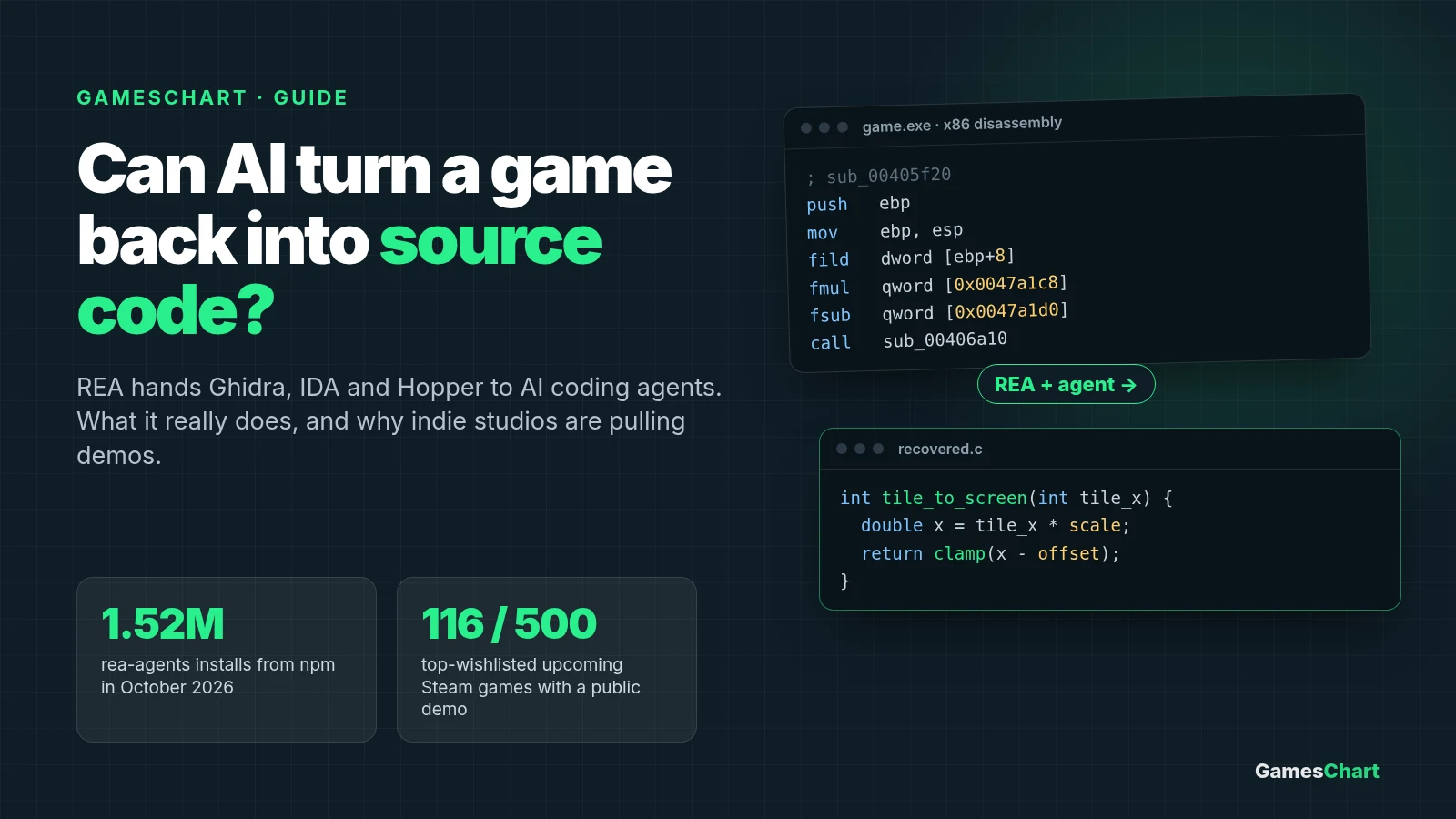
A free tool called REA, short for Reverse Engineer Anything, lets AI coding agents such as Claude Code, Codex and Cursor drive real reverse-engineering software. A viral two-part TikTok explainer went further: it said closed-source games can now be turned back into clean C++ in a weekend, and that independent researchers had run 482 controlled tests proving it. Some of that holds up. Some of it doesn't.
What REA actually is
REA is an MIT-licensed MCP server and command-line tool, published on GitHub by the account morluto and installed from the npm package rea-agents. It doesn't decompile anything itself. It connects an agent to tools you already have: Hopper, Ghidra (the free reverse-engineering suite the US National Security Agency released in 2019) or IDA for native programs, plus analysers for Electron apps, .NET assemblies, Android packages and websites. DevToolLab counted 207 tools exposed to the agent on its install.
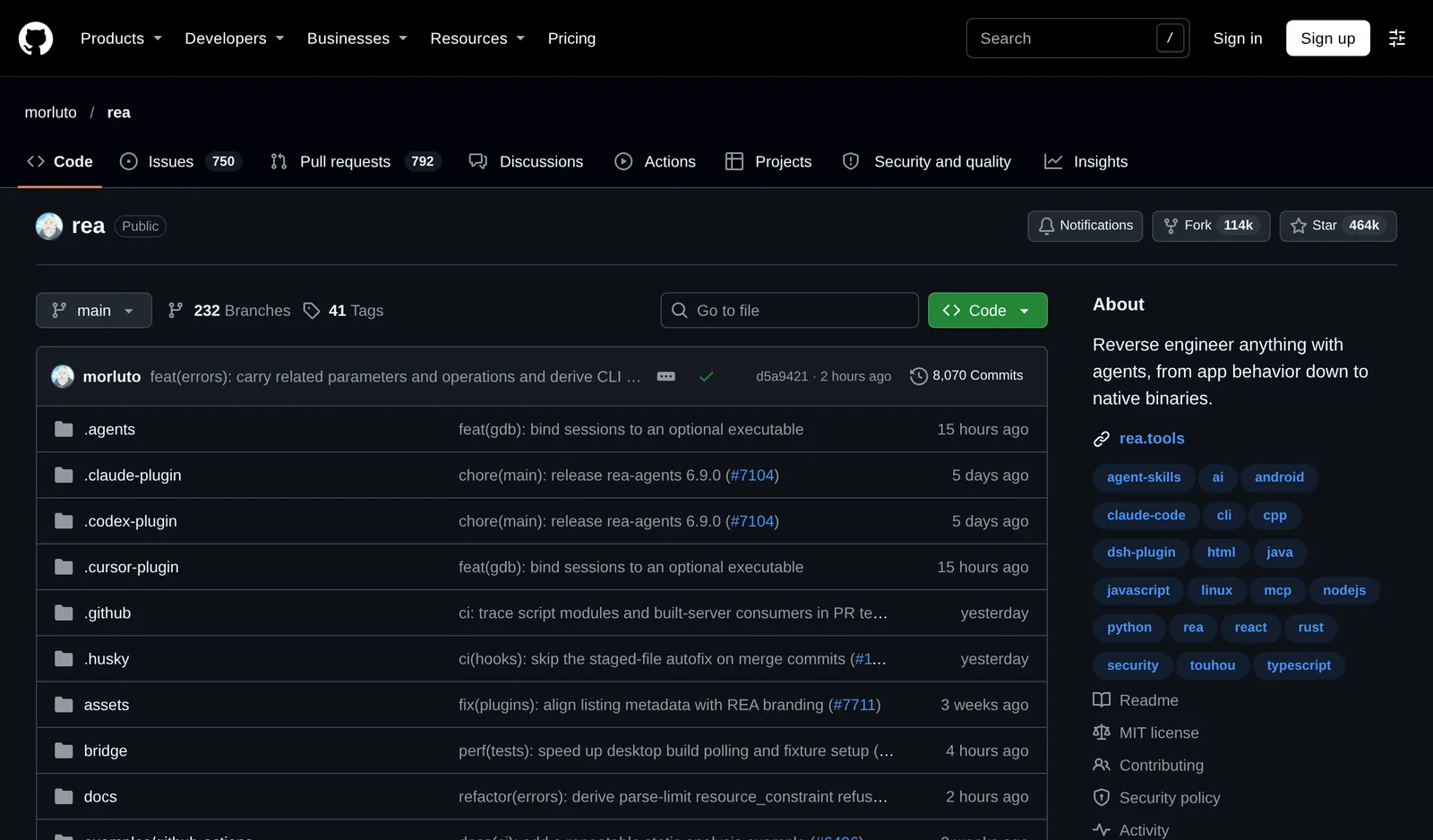
GitHub showed 464,087 stars and 113,581 forks when we checked on 16 November, but posts about REA have quoted anywhere from about 110,000 to 300,000 over the past month, and one reviewer called the numbers unusual. Stars are easy to inflate, so we looked at a harder number: how often the package is actually installed.
Installs went from hundreds to millions in October
npm's own download counter shows 491 installs of rea-agents in the whole of September, then 1,522,851 in October and 883,409 in the first 15 days of November. The jump starts on 3 October and peaks at 133,616 installs on 13 October.
rea-agents installs per day (npm)
1 September to 15 November 2026. Hover for the day's count; switch to log scale to see September.
- 1 16 Oct: Alliance Arts cancels the Drunken Goddess Reflux demo
- 2 19 Oct: Digital Sun moves its ReVamp playtest to Discord
- 3 30 Oct: Game Developer reports Anthropic's Claude Code change
| Period | Installs |
|---|---|
| September 2026 | 491 |
| October 2026 | 1,522,851 |
| 1–15 November 2026 | 883,409 |
| Busiest day (13 October) | 133,616 |
Source: npm registry download counts, read 16 November 2026. npm reports zero for 7, 8 and 15 September and 6, 14, 15, 19 and 20 October; those look like gaps in npm's counter, so they're left off the line and the October total is a floor.
Downloads count installs, including automated ones such as build servers, not people. They still show REA going from a niche tool to one that hundreds of thousands of machines pulled down in a fortnight.
What the tests showed
The video's "482 controlled tests" isn't something we could find. The comparison that does exist is smaller and more interesting:
- A developer behind a stripped-down alternative called leanrea ran Claude Code (Sonnet 5.5, on one Mac) through four tasks, three times each, and posted the results on PyTorch KR. REA scored 75/75; the plain script scored 74/75 and finished 38% faster at 35% lower cost. It's one person's measurement on one machine, not a peer-reviewed study.
- French blogger Korben ran four exercises with REA 6.4.0, then again without it. Claude Code still succeeded every time, writing its own Ghidra scripts where REA would have handed it the pseudocode.
REA against a plain script, with REA's figure set to 100
Lower is better for time and cost. Hover a row for the raw result.
| Measure | REA | Plain script (leanrea) |
|---|---|---|
| Tasks passed | 75 of 75 | 74 of 75 |
| Time taken | 100 | 62 (38% faster) |
| Cost | 100 | 65 (35% cheaper) |
Source: leanrea benchmark summary on PyTorch KR (October 2026): Claude Code with Sonnet 5.5, four tasks run three times each on one Mac.
The video's conclusion is the part that stands: the agent and the model do most of the work, not the wrapper. Take REA away and an agent pointed at Ghidra still gets there.
What REA looks like on a real game
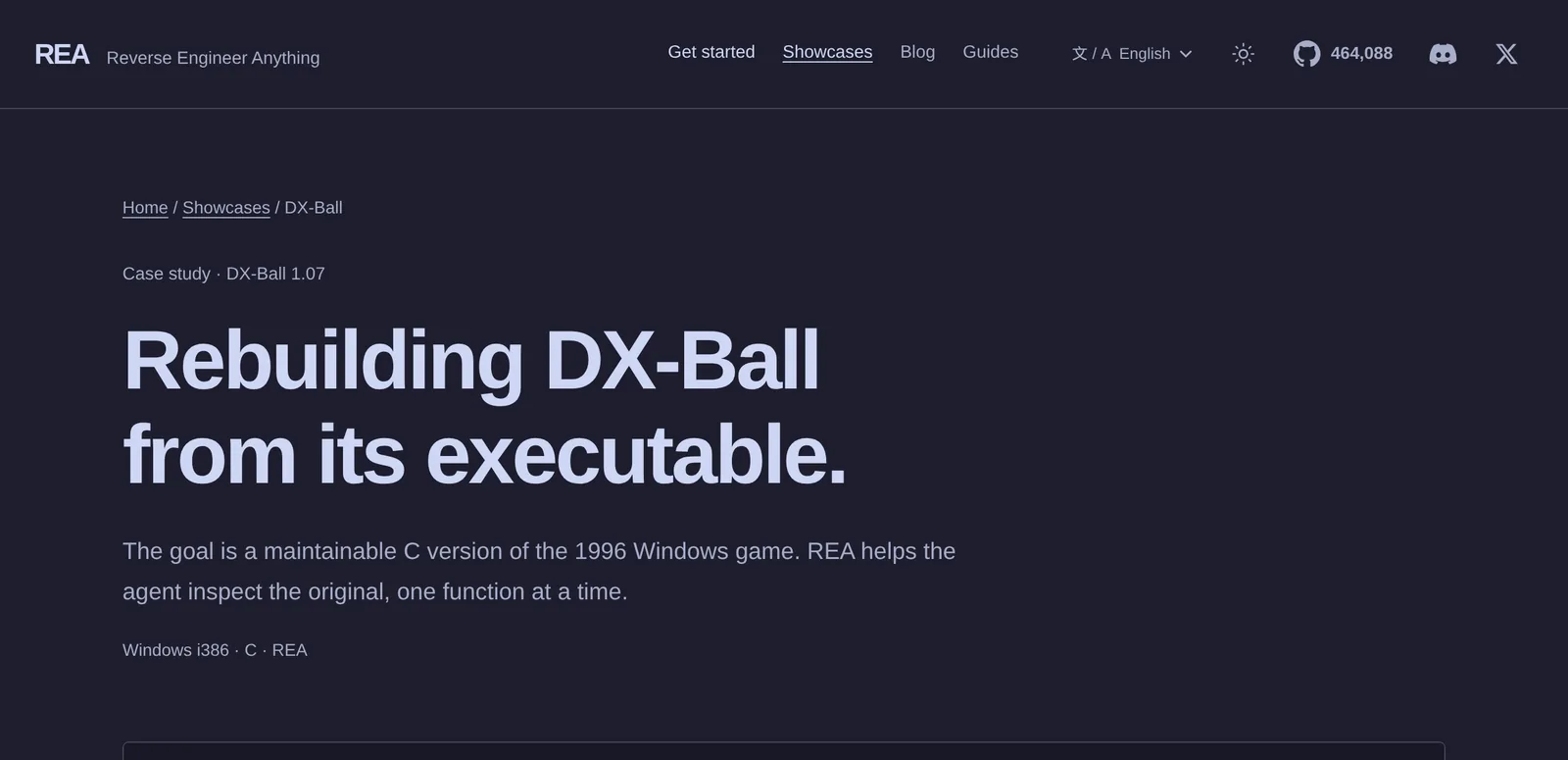
REA's makers publish their own game work. Their DX-Ball case study rebuilds the 1996 Windows brick-breaker from its executable, one function at a time: by its 7 October checkpoint the project had 55 functions rewritten in C, checked against the original code in 45,380 comparisons, and 33 that compile back to the same bytes. A second case study rebuilds the bullet patterns of the PC-98 game Touhou 4: Lotus Land Story. Neither is a playable copy yet; both show the method working on real game code.
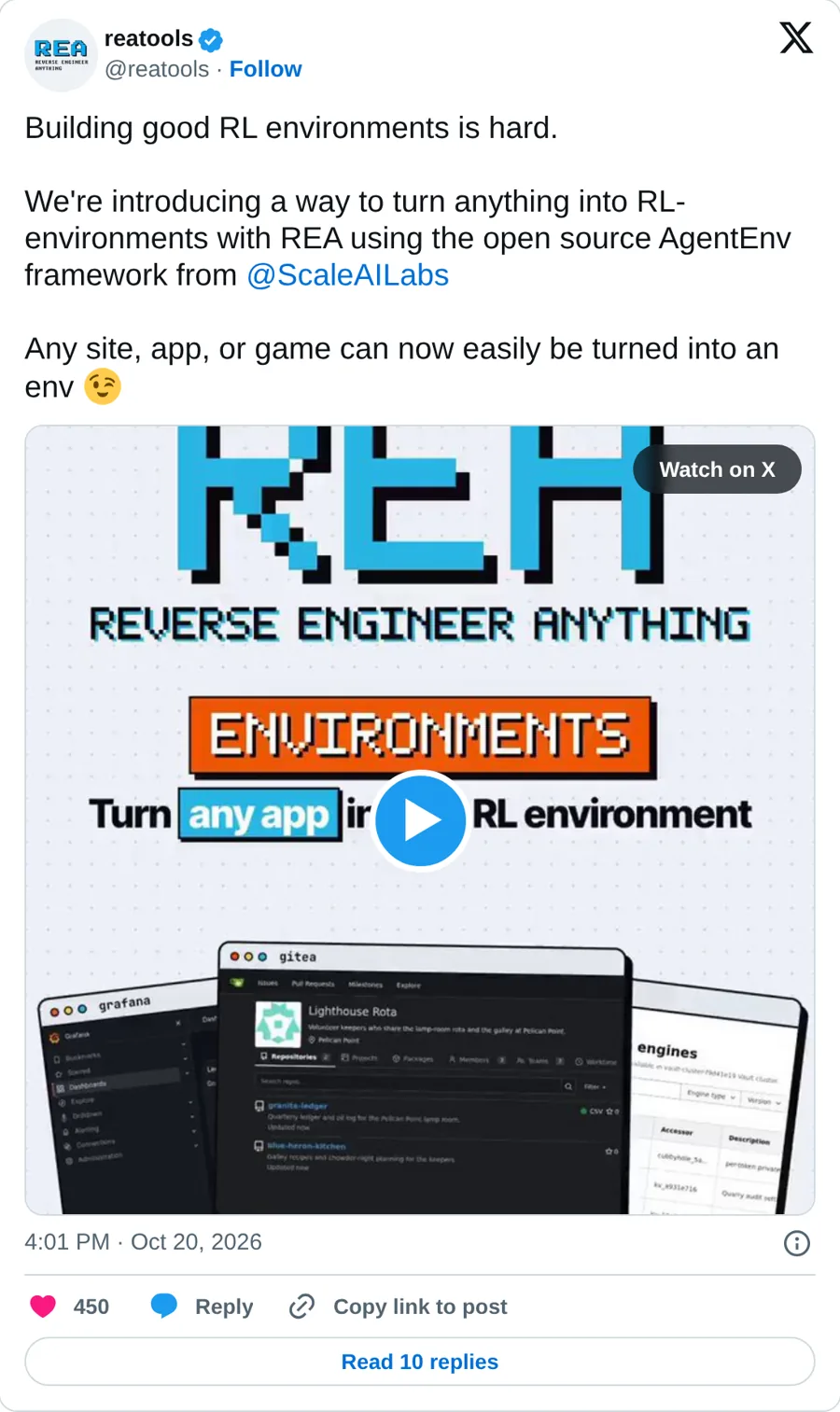
REA's team also posted a short demo video on 20 October. It shows the tool turning apps into training environments for AI agents rather than copying a game, but it's the clearest look at REA running.
What it's being used for
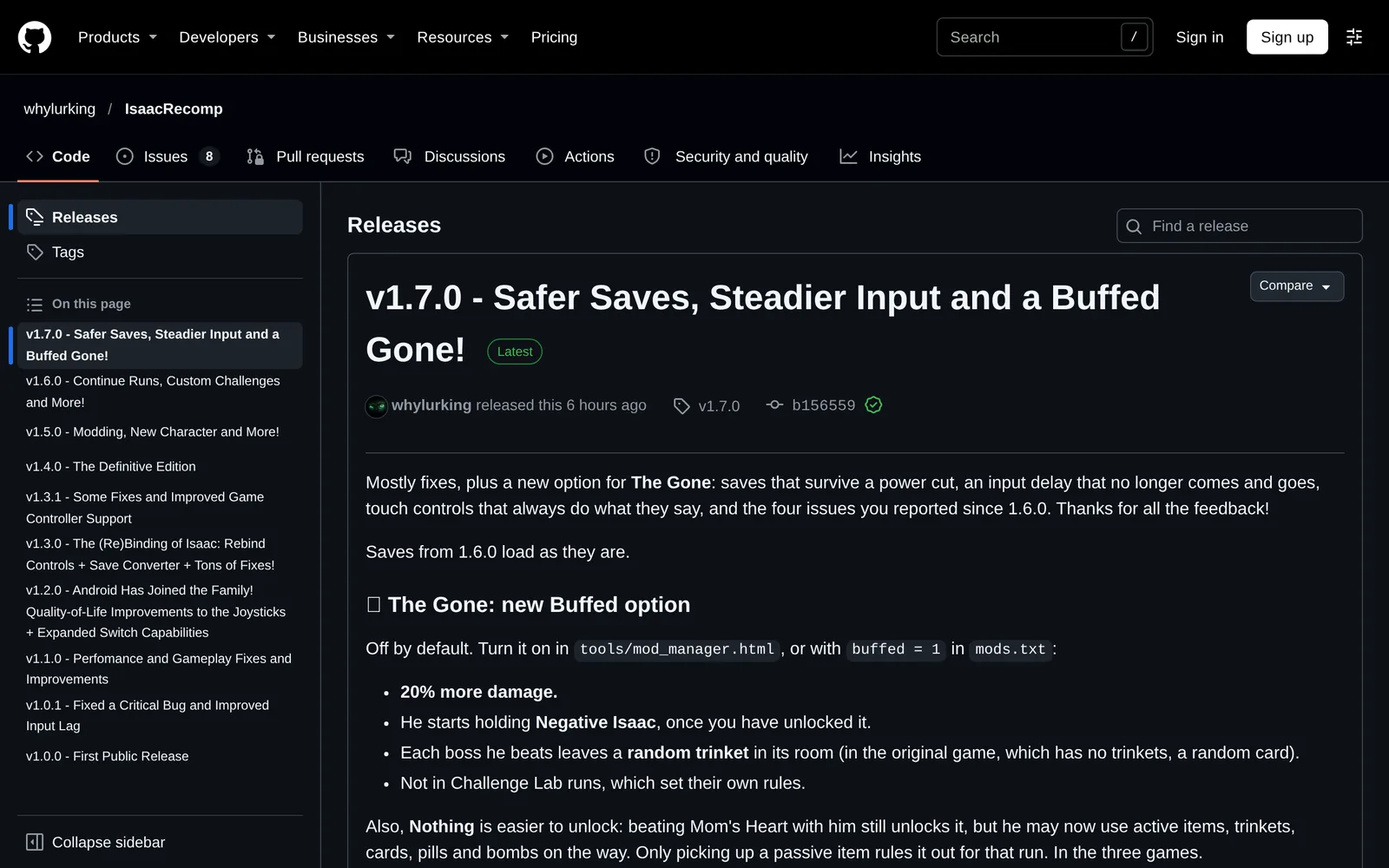
Game preservation got there first. Open-source native ports such as IsaacRecomp, a recompiled PC port of The Binding of Isaac, are shipping regular releases: version 1.7.0 went out on 16 November.
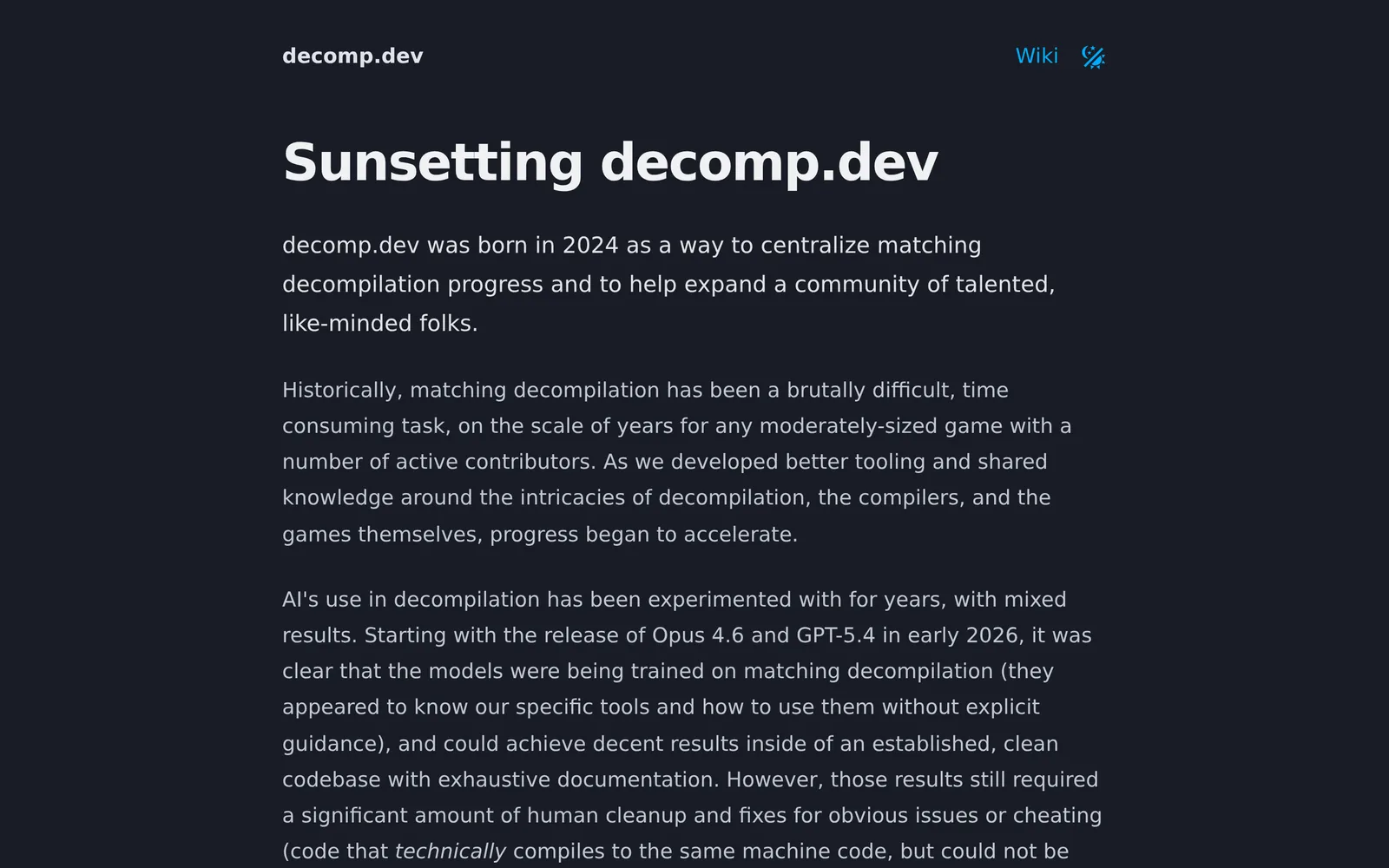
The speed has a cost too. In October the admin of decomp.dev, a site that tracked fan decompilation projects, shut down its public index, saying AI-assisted forks and rushed ports had broken the community side of the work (GamesRadar+ and Time Extension covered it). The notice is still the site's front page.
The video also named reconstructions of Battlefield 2's engine, Subway Surfers, GunZ and a PlayStation 5 translation project, plus teardowns of a Plaud voice recorder and Notion's desktop app. We couldn't find primary sources for those as of 16 November, so they're not covered here.
Why developers are pulling demos
Two studios changed their plans in October, and both said why in their own posts.
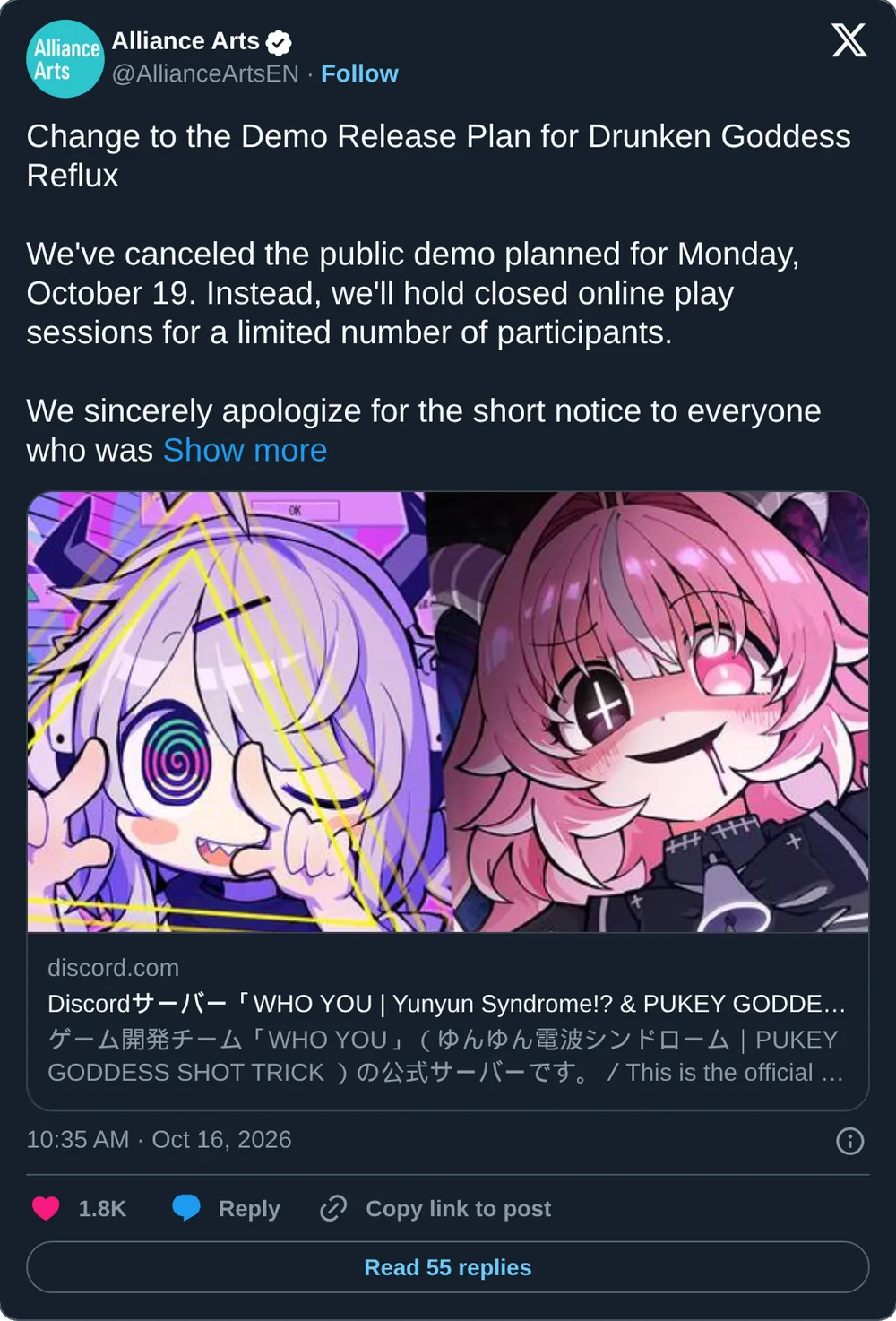
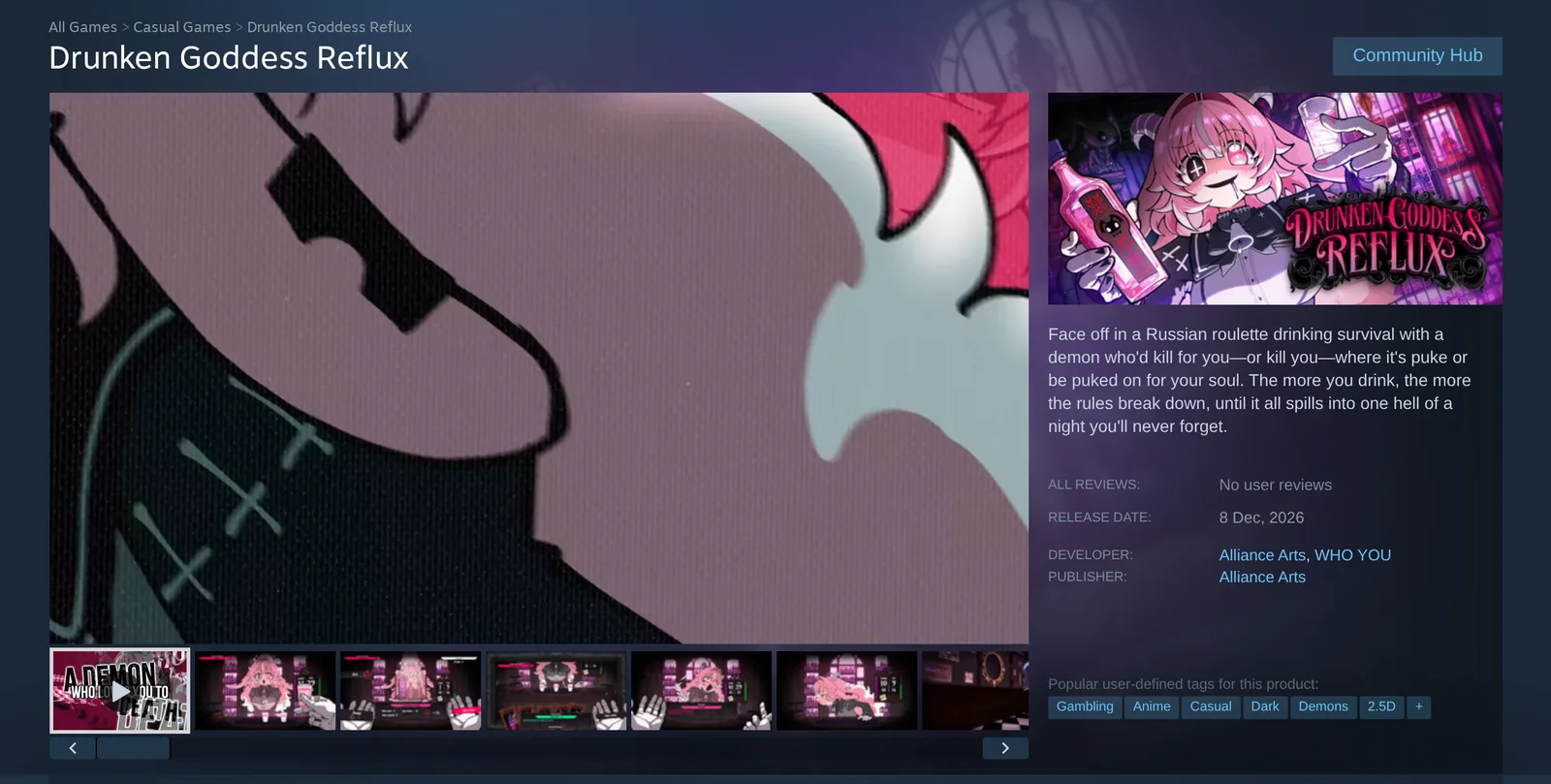
On 16 October Alliance Arts cancelled the public demo of Drunken Goddess Reflux, planned for 19 October, and moved to closed sessions. The studio said it couldn't police its rules on posting and streaming with its current team, and that the demo could be used to imitate the game with AI before its 8 December launch. PC Gamer reported it the same week. The game's Steam page still has no demo.
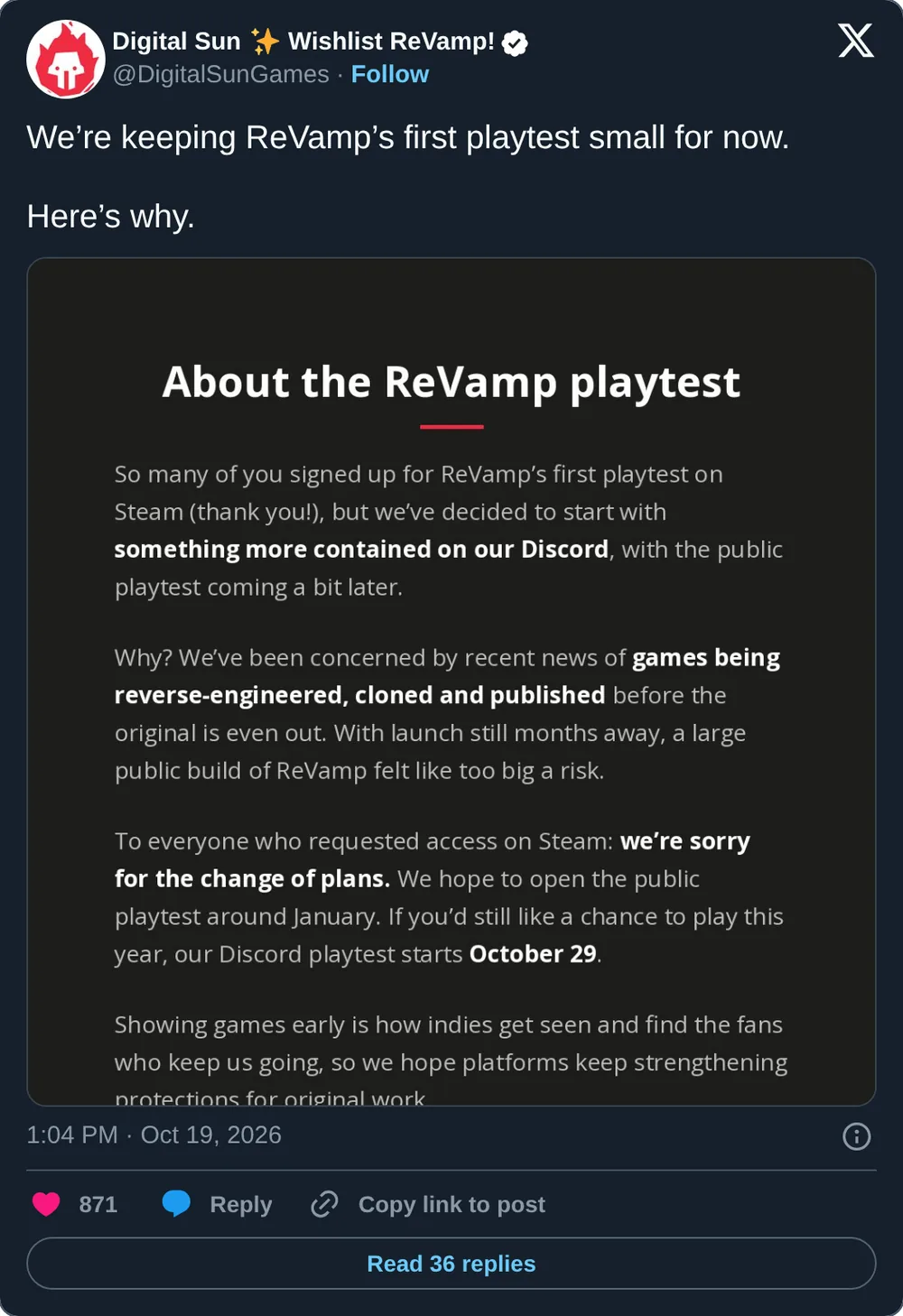
Three days later Digital Sun, the Moonlighter studio, said it would keep the first playtest of ReVamp on its Discord instead of Steam, pointing to games being reverse-engineered, cloned and published before the original is out. It hopes to open a public playtest around January, and Game Developer covered the change.
At the end of October, Anthropic changed Claude Code so it won't recreate a specific existing game, even under a new name. Anthropic's Addy Osmani confirmed the change to Game Developer on 30 October, and TweakTown followed up in November. Original games, genre games and games from the user's own designs are still allowed, and the rule doesn't stop someone using another model.
How many upcoming games have a demo out
We checked Steam's 500 most-wishlisted upcoming games on 16 November. 116 (23.2%) already have a public, downloadable demo, rising to 32.9% of games tagged Indie, against 13.1% of the rest. Only 3 of the top 50 have one. Most of those demos went out before their game had a launch day, and the median demo has been public for 160 days.
Share with a public demo
Steam's 500 most-wishlisted upcoming games, 16 November 2026. Switch the view above the bars.
| Segment | With a public demo | Share |
|---|---|---|
| Top 50 | 3 of 50 | 6% |
| Top 100 | 9 of 100 | 9% |
| Top 250 | 44 of 250 | 17.6% |
| All top 500 | 116 of 500 | 23.2% |
| Tagged Indie | 84 of 255 | 32.9% |
| Not tagged Indie | 32 of 245 | 13.1% |
| Firm launch day | 26 of 66 | 39.4% |
| No date yet | 51 of 284 | 18% |
Source: GamesChart, from Steam's store search and store API. Full method in our demo dataset.
The full breakdown and method are in our demo dataset.
A demo is only part of a game, and no studio in that list has said its demo was copied. But for a small team that releases a demo to earn wishlists, that playable code is now easier to read than it was a year ago.
What the law says (briefly)
Copying a game's code is copyright infringement whether a person or an AI does the typing. Reverse engineering for compatibility, and rewriting software from a written description of what it does (the "clean room" method), have long had more legal room, and lawyers haven't settled how that applies when one AI writes the description and another writes the code. This isn't legal advice: a developer worried about a specific clone should speak to a lawyer and use the store's copyright takedown process.
Games and data
Sources
- REA (Reverse Engineer Anything) – GitHub repository by morluto, published by github.com
- rea-agents – npm package page (Socket), published by socket.dev
- DevToolLab – REA AI reverse engineering tool, tested (18 Oct 2026), published by devtoollab.com
- Korben – REA, I tested AI agent reverse engineering (Oct 2026), published by korben.info
- PyTorch KR – leanrea vs REA benchmark summary (Oct 2026, Korean), published by discuss.pytorch.kr
- jacar.es – REA tested with Ghidra and Electron, published by jacar.es
- GamesRadar+ – Decomp community tool shutting down over AI (Oct 2026), published by gamesradar.com
- Time Extension – decomp.dev closes in the wake of AI-based bad actors (Oct 2026), published by timeextension.com
- IsaacRecomp v1.6.0 release notes, published by newreleases.io
- Game Developer – Anthropic orders AI tool Claude to stop remaking video games (30 Oct 2026), published by gamedeveloper.com
- TweakTown – Anthropic's Claude Code restrictions on vibe-coded game ports (Nov 2026), published by tweaktown.com
- PC Gamer – Developer cancels public demo, fearing AI clones (Oct 2026), published by pcgamer.com
- Game Developer – Moonlighter developer delays public playtest over AI cloning (Oct 2026), published by gamedeveloper.com
- npm – rea-agents daily downloads, 1 September to 15 November 2026 (npm registry API), published by api.npmjs.org
- REA – Rebuilding DX-Ball from its executable (case study, checkpoint 7 Oct 2026), published by rea.tools
- reatools on X – REA environments demo video (20 Oct 2026), published by x.com
- Alliance Arts on X – Change to the demo release plan for Drunken Goddess Reflux (16 Oct 2026), published by x.com
- Digital Sun on X – About the ReVamp playtest (19 Oct 2026), published by x.com
- decomp.dev – Sunsetting decomp.dev (notice on the site), published by decomp.dev
- GamesChart – Steam's most-wishlisted upcoming games with a public demo (16 Nov 2026), published by gameschart.com
Cite this page
Using something from this page? Copy a citation below. A link back to this page is all we ask.
GamesChart’s text and figures are free to reuse under CC BY 4.0 with a credit link to this page. Game art, logos and screenshots belong to their publishers and aren’t covered.
Related guides
- Guide
AI-assisted game coding: the setups that work in 2026
The AI coding setups game developers use in Unity, Unreal and Godot in 2026, what surveys say, and the habits that separate working projects from failed ones.21 Oct 2026 - Guide
Nearly half of new Steam games now disclose AI: the numbers behind the Next Fest backlash
36% of games in Steam Next Fest October 2026 disclose generative AI, and 49.7% of October's new Steam games did. The numbers, and why players want a filter.21 Oct 2026 - Guide
GTA 6 New Zealand trick: unlock times, and the risk to your account
GTA 6 unlocks first in New Zealand, at 11:00 GMT on 18 November. The trick could start it up to 21 hours early, but risks your PSN or Xbox account.17 Nov 2026